
The Digital Wake-Up Call for Industrial Businesses
Industrial companies once relied on trade shows, distributors, and long-standing personal relationships. That era has shifted. Buyers now expect the same seamless experience they get from Amazon—fast, intuitive, and transparent.
Industry data shows B2B ecommerce is expanding at double-digit rates, with buyers making purchases that often exceed $500,000 entirely online.
If your website feels outdated, you’re not just behind the curve—you’re losing credibility, deals, and market share.
Why Website Design Is Your Hidden Sales Advantage
Modern design isn’t about aesthetics; it’s a sales strategy.
- First Impressions Decide Trust
Research shows 75% of buyers judge a company’s credibility based on design alone. A dated site signals inefficiency and lack of professionalism.
- Customer Expectations Have Shifted
Buyers want clear pricing, fast navigation on mobile, and self-service tools for quotes and reorders. Anything less creates friction.
- Competitive Edge
Businesses that invest in design reduce buying cycles, improve customer satisfaction, and increase conversions—critical advantages in industries where margins are tight.
The Business Impact of Great Industrial Web Design
- Improved User Experience
Advanced filters, logical navigation, and easy quote requests keep buyers engaged and moving forward.
- Increased Conversions
Simplified checkout reduces cart abandonment, a pain point responsible for up to 70% of lost orders in B2B ecommerce.
- Stronger Trust and Confidence
Certifications, testimonials, and secure payment gateways build confidence for high-value transactions.
- Operational Efficiency
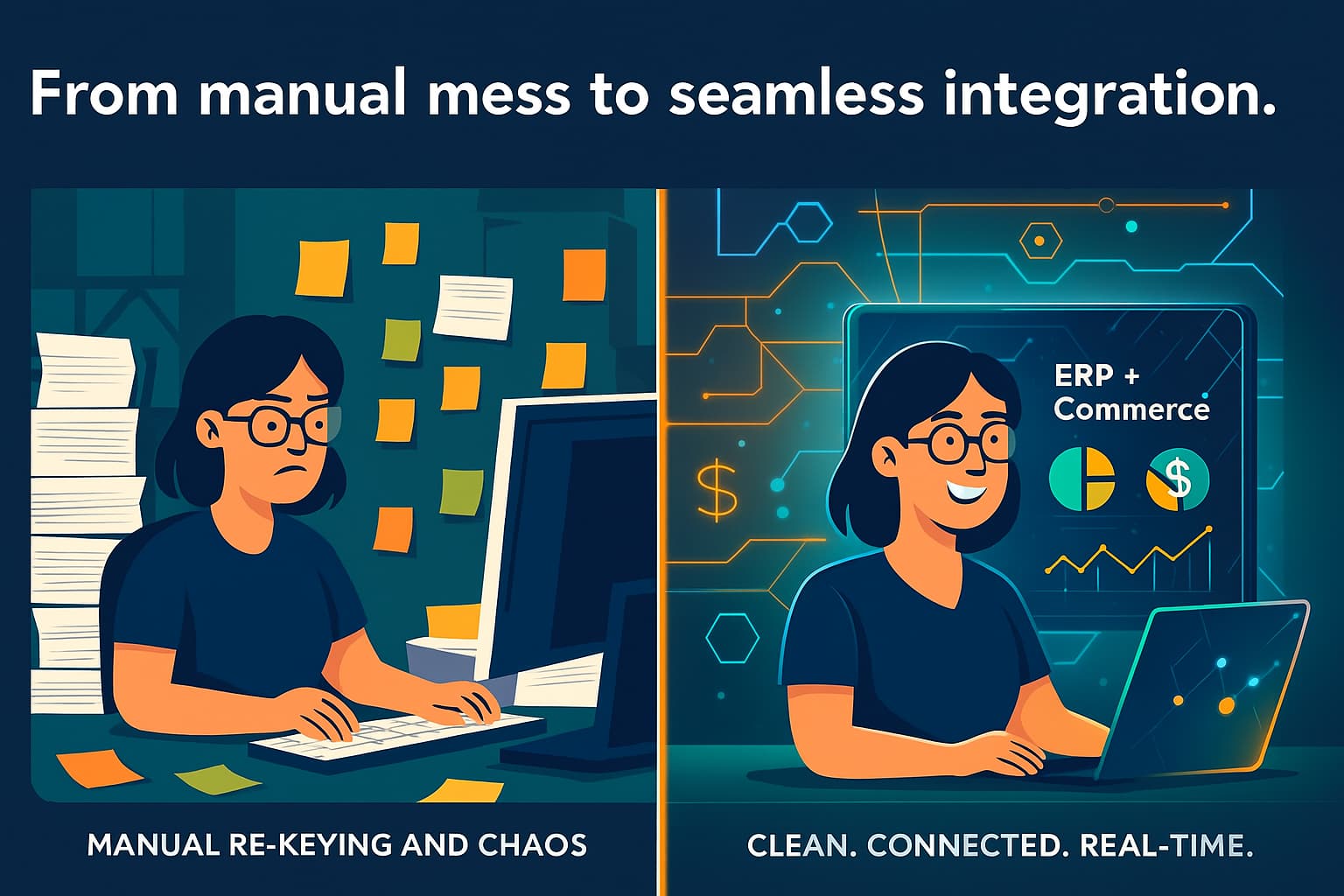
ERP integration ensures accurate inventory, pricing, and fulfillment—eliminating costly manual errors.
How Design Directly Drives Sales
- Higher Average Order Value
Configurators and transparent pricing encourage cross-sells and upsells.
- Faster Quote-to-Order Conversions
Automated workflows reduce lead times and improve cash flow.
- Improved Retention
Self-service portals simplify reorders, keeping repeat business frictionless.
Principles of High-Performing Industrial Websites
- Mobile-First: Optimized for field reps and technicians accessing on the go.
- Clear Navigation: Logical categories, advanced search, and visual configurators.
- Transparency: Show pricing, lead times, and inventory upfront.
- Trust Signals: Display certifications, customer testimonials, and secure payment markers.
Costly Mistakes to Avoid
- Outdated or incomplete product catalogs
- Poor mobile usability
- Hidden or delayed pricing information
- Complex checkout processes that stall conversions
- Weak product search
- Missing technical resources such as datasheets and CAD files
Measuring Digital Success
Track meaningful KPIs, not vanity metrics. Focus on:
- Visitor-to-lead conversion rate
- Quote-to-order speed
- Percentage of self-service orders
- Portal adoption rates
- Cart abandonment rate
The Competitive Advantage
Industrial website design is no longer optional. A modern, ERP-integrated site is a sales engine that positions your company for growth in a digital-first economy.
Whether built on Shopify, Magento, BigCommerce, or a custom solution, the goal is the same: deliver a frictionless, trust-driven experience that aligns with today’s buyer expectations.

Transform Your Website Into a Sales Engine
Your buyers have moved online. Has your business kept pace?
Kensium helps manufacturers and distributors build industrial websites that sell, convert, and retain customers. With deep expertise in ecommerce platforms and ERP integration, we create scalable systems designed to drive measurable growth.
Frequently Asked Questions (FAQ) on Industrial Website Design
Q1: Why does website design matter so much in B2B industries?
Because industrial buyers are making large, complex purchases—often six figures or more. A modern, user-friendly website builds credibility, reduces friction in the buying process, and shortens the sales cycle.
Q2: What features should every industrial website include?
Key features include clear product catalogs, advanced search and filtering, transparent pricing, mobile-friendly layouts, and integration with ERP systems. Self-service portals and configurators are also critical for repeat business.
Q3: How does industrial website design impact sales?
A clean, functional site increases conversions, reduces abandoned carts, and encourages higher-value orders. It also creates efficiency by integrating with ERP systems for real-time pricing and inventory accuracy.
Q4: What are common mistakes to avoid in B2B website design?
Hidden pricing, outdated catalogs, weak mobile usability, and overly complex checkouts are among the most damaging. Missing trust signals—like certifications or case studies—also hurts buyer confidence.
Q5: How can I measure the ROI of a redesigned industrial website?
Focus on metrics that matter: visitor-to-lead conversion, quote-to-order speed, self-service adoption, and cart abandonment rates. Tracking these KPIs shows whether your design is directly improving sales and efficiency.
Q6: Do I need a custom-built site, or can I use platforms like Shopify, BigCommerce, or Magento?
Industrial websites can perform extremely well on leading platforms like Shopify, Magento, and BigCommerce. The key is customization and ERP integration to support your unique workflows, catalogs, and buyer expectations.
Q7: How long does it take to see results from a website redesign?
Many businesses start to see improvements in lead conversions and customer satisfaction within the first 90 days. Full ROI depends on adoption of self-service tools, integration depth, and customer engagement.
.png)
















-small.jpeg)