Why spreadsheets persist even with Acumatica and BigCommerce
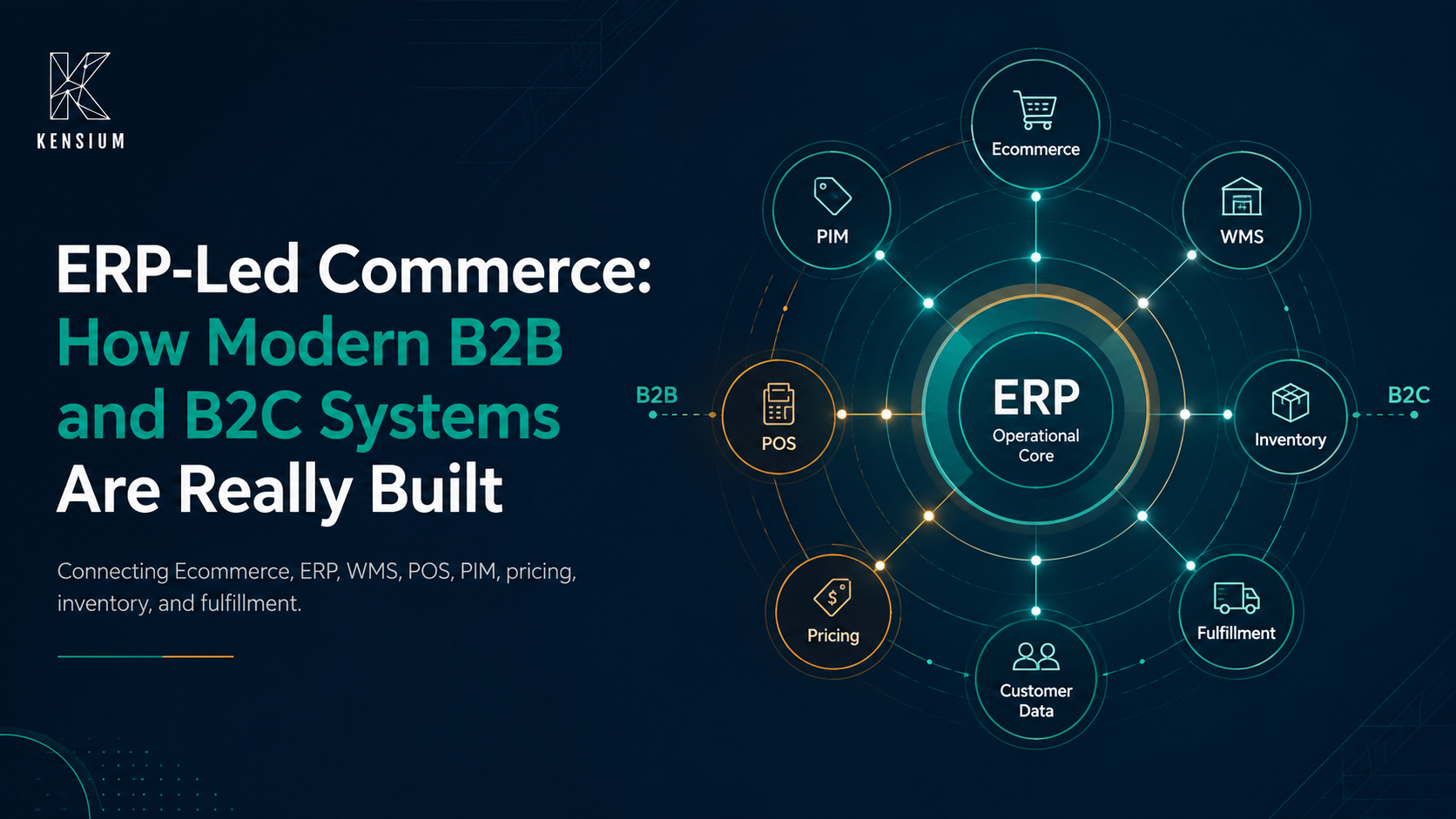
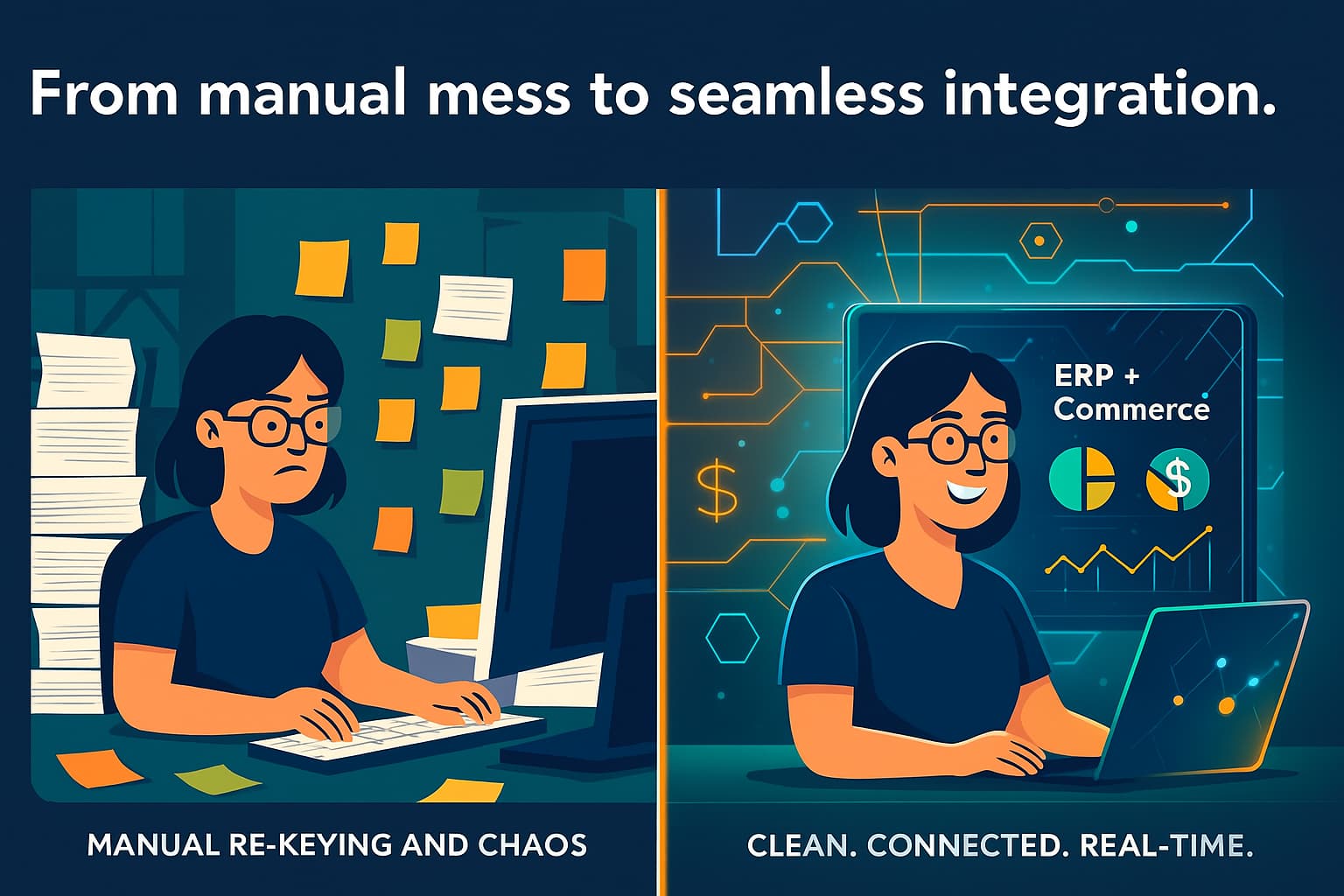
Teams that run Acumatica alongside BigCommerce often expect the two platforms to stay aligned once the connector is live. In real operations, spreadsheets still act like glue: a place to track inventory adjustments that have not synced yet, to validate which B2B customers should see which prices, or to reconcile fulfillment and billing when two systems show different answers. [1]
Both ecosystems acknowledge why this happens. BigCommerce’s guidance on ERP integration describes how disconnected systems push teams into spreadsheets, duplicate data entry, and workflows that do not connect. [2] Kensium describes a similar reality around Acumatica, ecommerce, POS, and warehouse tools: when they are not designed to operate as one model, inventory and order movement drift, and teams fall back to spreadsheets to reconcile reality. [3]
The takeaway is that this is usually an integration design problem, not a platform failure. Acumatica promotes commerce connectors and highlights real time, bidirectional data flow to connect platforms like BigCommerce to the rest of the business. [4] BigCommerce frames ERP integration in the same spirit: eliminate silos and manual work through deliberate architecture choices such as APIs, middleware, or integration platforms. [2]
User sentiment often lands on process ownership. In a Reddit discussion about when ERP starts adding value, commenters argue that integrations help, but they do not fix unclear ownership. The payoff comes when handoffs do not need manual checks and exceptions are surfaced by the system, so teams stop double tracking elsewhere. [5]
What Acumatica does best for commerce operations
Acumatica is built to govern the back office rules that spreadsheets try to replicate: inventory availability, approvals, order processing controls, and the financial impact of operational decisions. [6]
At the platform level, Acumatica explains cloud ERP as ERP delivered through internet connected servers, with “anytime, anywhere” access and a central repository that integrates departments under one umbrella of shared data. [7] In ecommerce environments, that matters because inventory, customer service, fulfillment, purchasing, and accounting frequently need the same version of the truth.
Operationally, Acumatica’s inventory messaging emphasizes system wide control and visibility across geographically dispersed locations. [8] Its Sales Order Management materials highlight practical controls that commonly trigger spreadsheet workarounds when not modeled end to end: splitting orders across warehouses, allocating inventory, verifying credit limits, handling returns, and tailoring workflows and approvals. [9] In Order Management, Acumatica also emphasizes automation patterns (for example, automated sales order processing and shipping order generation) and governance through discount rules and price override policies. [10]
Finally, Acumatica’s ecosystem expects it to connect to selling channels. Its marketplace content about BigCommerce describes synchronization between the platforms, where changes entered in one system update in the other, enabling teams to manage orders, inventory, pricing, and inbound logistics with an ERP centered omnichannel approach. [11]
What BigCommerce does best for B2B selling
BigCommerce’s main job is to optimize how customers browse, price, purchase, and reorder. In B2B, that usually means company accounts, negotiated pricing, approvals, and purchase order based buying. [12]
On its B2B platform overview, BigCommerce highlights B2B purchasing controls such as managing approved payment options including purchase orders, as well as “sales rep masquerade,” where a sales rep can log in on behalf of a company to access shopping lists and place orders. [13] In its B2B checkout guidance, BigCommerce highlights customer specific pricing and catalogs, and it explicitly calls out native support for price lists and customer groups to tailor pricing. [14] Those are exactly the capabilities that, if not modeled correctly across the ERP and ecommerce stack, often end up living in spreadsheet trackers and email threads.
To quantify potential business value for B2B commerce operations, BigCommerce publishes results from a commissioned study by IDC[15]. BigCommerce reports outcomes across seven interviewed B2B companies using BigCommerce B2B Edition, including a 391% three year return on investment and a 7 month payback period, plus operational impact measures such as improvements in sales team productivity and platform stability (study results for the interviewed companies, not a guaranteed outcome). [16]
BigCommerce also emphasizes that ecommerce scale depends on ERP integration. Its ERP integration article describes how growing businesses start juggling spreadsheets when systems do not talk, and it highlights integration methods aimed at eliminating manual data entry. [2] Its ERP product messaging adds that BigCommerce offers pre built integrations via its marketplace and supports connecting ERPs via API when needed. [17]
Where spreadsheets sneak in when systems are connected
Spreadsheets usually appear in the seams between system responsibilities. Even if Acumatica and BigCommerce are technically connected, day to day ecommerce operations include timing, handoffs, and exceptions that are easy to underestimate. [18]
One seam is latency. BigCommerce warns that overselling causes delivery delays and can erode loyalty, and it emphasizes API driven integrations that sync inventory through the stack instead of manual merging. [19] If inventory updates lag, teams often keep a spreadsheet buffer for “available to sell,” especially for fast moving SKUs, multi location fulfillment, or products that are frequently adjusted because of damage, returns, and cycle counts.
A second seam is execution visibility between the ERP and the warehouse floor. Even when Acumatica governs orders, approvals, and returns, pick, pack, and ship actions can still happen outside the system if warehouse execution is not integrated in a way that keeps the ERP current. [20] Kensium describes this mismatch directly and notes that teams fall back to spreadsheets to reconcile reality when the stack was never designed to operate as one unified model. [21]
A third seam is omnichannel timing between ecommerce and retail. BigCommerce tells merchants to stop manually merging offline and online sales, inventory, and accounting by using POS partner integrations to automatically sync brick and mortar activity to the back end. [19] Kensium makes a parallel point on the Acumatica side: integration succeeds when POS and warehouse execution update the ERP quickly enough that systems stay aligned. [22] When POS is not integrated, spreadsheets often become the “temporary truth” for what sold today and what inventory should be considered available.
A fourth seam is B2B pricing, quotes, and approvals. BigCommerce calls out customer specific pricing and native support for price lists and customer groups. [14] Acumatica highlights structured pricing and discount controls, plus workflow and approval options. [23] But if the integration does not express who owns pricing, how approvals work, and where exceptions should live, spreadsheets become the approval router and audit trail.
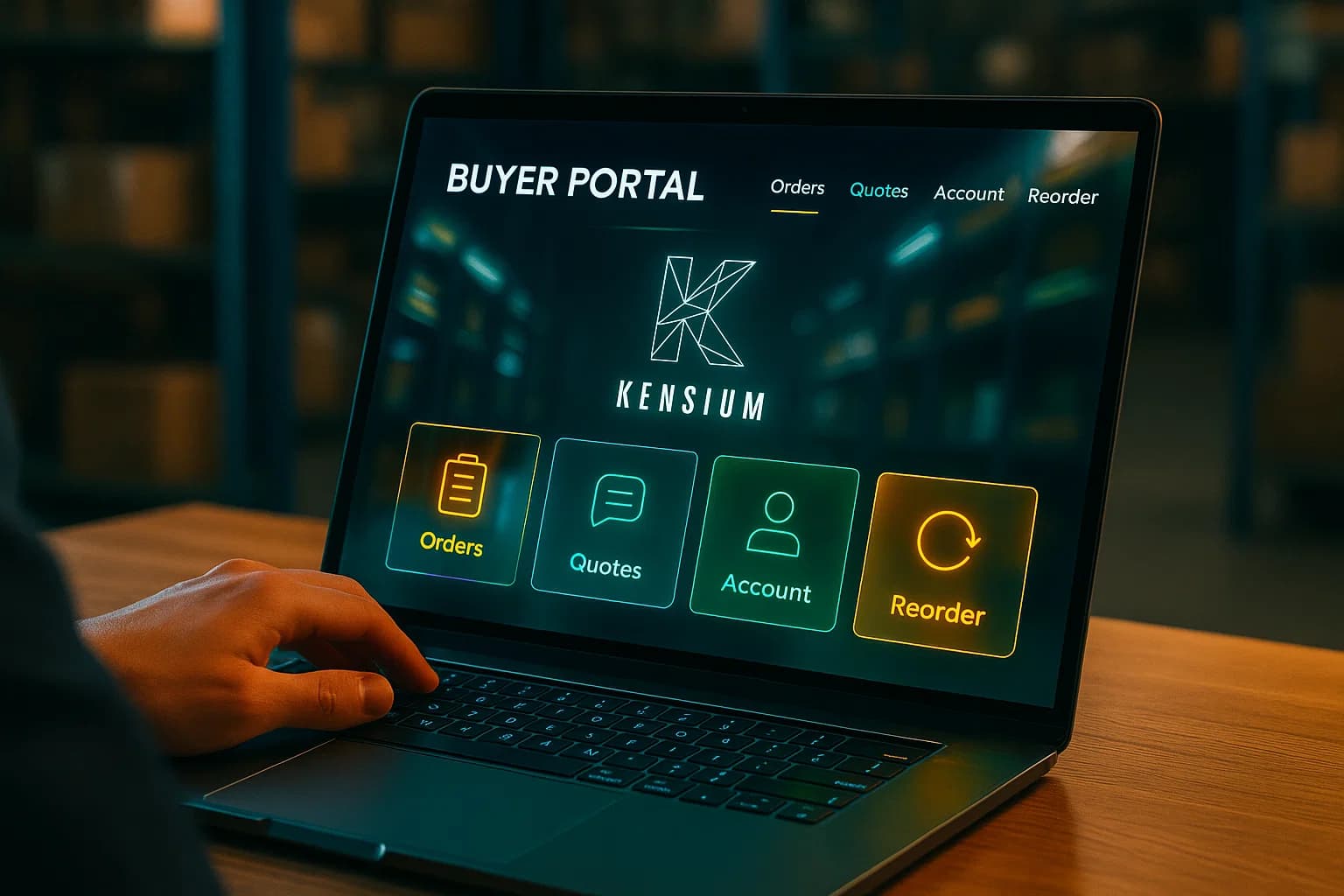
Kensium’s BigCommerce B2B connector is a useful proxy for these pain points because its feature list focuses on the same areas that commonly live in spreadsheets: customer specific pricing, RFQ and quote management, converting quotes to sales orders with approvals, quick ordering by SKU and quantity (including file upload), and buyer self service that stays synchronized with Acumatica. [24] Kensium also describes connector mechanics that address the operational “what if it breaks” reality that spreadsheets often bandage, including queueing when one system is offline, batch resync for historical changes, robust logging, and configurable error notifications. [25]
A final seam is governance risk. Spreadsheets feel flexible, but they create operational risk when they become a system of record for pricing or inventory. Reuters[26] has documented that spreadsheet errors still occur in high stakes professional contexts, citing a case where Goldman Sachs[27] reportedly double counted shares in a TIBCO Software[28] sale valuation. [29]
Reddit user experiences highlight one more practical lesson: do not assume a connector will behave the same way in every environment. One user recommends Acumatica’s native connector approach and notes built in integrations like Amazon[30] and Shopify[31] alongside BigCommerce, while another shares a cautionary anecdote about instability and throttling that required workarounds. [32]
How to design an integration that replaces spreadsheets
The path away from operational spreadsheets is to build an operating model that the stack can enforce, and to make exceptions visible enough that teams do not feel the need to keep an external safety net. [33]
BigCommerce defines ERP integration as connecting ecommerce to back end operations to eliminate silos and manual data entry, and it frames implementation choices through patterns like APIs, middleware, or integration platforms. [2] Kensium’s Acumatica integration guidance similarly positions ecommerce integration as essential for streamlining operations, enhancing customer experiences, and accessing real time data, while emphasizing the need to align integration work to how the business runs day to day. [34]
A spreadsheet reducing integration design usually starts with four decisions.
First, define the system of record for each domain: products, customers, pricing, inventory, orders, fulfillment states, and invoices. Kensium’s connector content is explicit about treating Acumatica as the primary data source while synchronizing BigCommerce B2B workflows to it. [35] BigCommerce’s own integration framing supports the same intention by emphasizing elimination of manual data entry and silos through integration. [2]
Second, define freshness requirements by workflow. Acumatica emphasizes real time, bidirectional flow for commerce connectors, while BigCommerce emphasizes timely inventory synchronization to avoid overselling and remove manual merging. [36] Decide where delays are acceptable and where they create customer visible errors. For many B2B sellers, the “non negotiables” tend to be contract pricing, available to sell inventory, and order acceptance.
Third, design for failure, recovery, and observability. One reason spreadsheets survive is that they act like offline mode. Kensium describes built in queueing, batch resync of historical changes, robust logging, and error notifications as mechanisms that replace spreadsheet backstops. [25] BigCommerce’s integration patterns (API, middleware, platform) are relevant here because they are frequently chosen based on how well they handle scale, monitoring, and recovery when something does go wrong. [2]
Fourth, model B2B organizations as they actually buy. BigCommerce highlights sales rep masquerade and B2B buyer workflows, and Kensium’s connector describes role management, approval authority, and mapping company user and location hierarchies between the B2B portal and Acumatica. [37] When that model exists end to end, approvals and exceptions can be routed in system instead of via email plus a spreadsheet tracker.
A litmus test comes from BigCommerce’s own framing: if a daily process still requires exporting data, manually editing it, and re importing it, the integration has not eliminated manual data entry or silos. [2]
FAQ and next steps
Why do spreadsheets still exist if Acumatica and BigCommerce can sync data?
Because syncing is a capability, but spreadsheets reflect gaps in ownership, timing, or exception handling. Kensium describes teams relying on spreadsheets when inventory and orders drift across systems, and it stresses designing data flows and workflow ownership rather than assuming technology alone will connect operations. [3]
Which system should own inventory in an Acumatica BigCommerce integration?
Most organizations treat the ERP as the operational record for inventory and costing, while ecommerce consumes inventory availability for selling. Acumatica emphasizes system wide inventory control across locations, and BigCommerce emphasizes inventory synchronization to prevent overselling. [38]
Where should B2B contract pricing live?
Contract pricing usually belongs in the system that governs customer records, approvals, and financial control. Acumatica describes pricing and discount governance in order management, while BigCommerce describes customer specific pricing supported through constructs like price lists and customer groups. [39]
How do quotes and approvals create spreadsheet workarounds?
Quotes and approvals are workflow heavy. Kensium’s B2B connector explicitly adds RFQ and quote handling, conversion to orders, and approval workflows, synchronized with Acumatica, precisely because these B2B processes often end up tracked in spreadsheets when not supported end to end. [24]
How do we avoid keeping “backup spreadsheets” for when integrations fail?
Replace the spreadsheet backstop with operational tooling: queueing, logs, fast resync, and clear alerting. Kensium describes queueing when a system is offline, batch resync for historical changes, robust logging, and error notifications as connector capabilities. [25]
What does real user sentiment say about relying on connectors?
Some practitioners treat native connectors as the baseline, while others share cautionary anecdotes about instability and the need for workarounds, reinforcing the importance of monitoring and recovery design if the business goal is to remove spreadsheet based reconciliation. [32]
Kensium positions its BigCommerce services around ERP and system integrations and B2B configuration, and its Acumatica services around designing integrations that align ecommerce workflows to operational reality. [40]
https://www.kensium.com/bigcommerce
https://www.kensium.com/acumatica-erp
[1][2][15]https://www.bigcommerce.com/articles/ecommerce/erp-integration/
https://www.bigcommerce.com/articles/ecommerce/erp-integration/
[3][18][21][22][26][30][33] Who Can Actually Integrate Acumatica with Ecommerce, POS, and Warehouse Systems?
https://www.kensium.com/blog/who-can-integrate-acumatica-with-ecommerce-pos-and-warehouse-systems
[4] Acumatica eCommerce Integrations | Commerce Connectors
https://www.acumatica.com/cloud-erp-software/commerce-connectors/
https://www.reddit.com/r/ERP/comments/1poxyle/when_does_erp_actually_start_adding_value/
https://www.reddit.com/r/ERP/comments/1poxyle/when_does_erp_actually_start_adding_value/
[6][7]https://www.acumatica.com/what-is-cloud-erp-software/
https://www.acumatica.com/what-is-cloud-erp-software/
[8][38] Inventory Management Software | Cloud based ERP for Inventory
https://www.acumatica.com/cloud-erp-software/inventory-management/
[9][20]https://www.acumatica.com/cloud-erp-software/distribution-management/sales-order-management/
https://www.acumatica.com/cloud-erp-software/distribution-management/sales-order-management/
[10][23][39]https://www.acumatica.com/cloud-erp-software/order-management-software/
https://www.acumatica.com/cloud-erp-software/order-management-software/
[11]https://www.acumatica.com/acumatica-marketplace/big-commerce-ecommerce-platform-for-acumatica/
https://www.acumatica.com/acumatica-marketplace/big-commerce-ecommerce-platform-for-acumatica/
[12][13][28][37] B2B Edition - A better way to B2B | BigCommerce
https://www.bigcommerce.com/solutions/b2b-ecommerce-platform/
[14][31] B2B Ecommerce Checkout Optimization in 2026
https://www.bigcommerce.com/articles/b2b-ecommerce/b2b-checkout/
[16] The Business Value of BigCommerce B2B Edition
https://www.bigcommerce.com/resources/2025-b2b-idc-business-value-report/
[17]https://www.bigcommerce.com/product/erp/
https://www.bigcommerce.com/product/erp/
[19]https://www.bigcommerce.com/solutions/omnichannel/
https://www.bigcommerce.com/solutions/omnichannel/
[24][25][35]https://www.kensium.com/acumatica-bigcommerce-b2b-connector
https://www.kensium.com/acumatica-bigcommerce-b2b-connector
[27][34]https://www.kensium.com/acumatica-erp
https://www.kensium.com/acumatica-erp
[29] Spreadsheet bungles alive and well in high finance | Reuters
[32] E-commerce for acumatica : r/acumaticaerp
https://www.reddit.com/r/acumaticaerp/comments/1j4nagb/ecommerce_for_acumatica/
[36]https://www.acumatica.com/resources/articles/erp-commerce-management/
https://www.acumatica.com/resources/articles/erp-commerce-management/
[40]https://www.kensium.com/bigcommerce
https://www.kensium.com/bigcommerce
Kensium Insights:
Integrating Acumatica with Ecommerce, POS, and WMS
ERP Integrations for Unique Manufacturing Needs
.png)