Retailers spend a lot of time and money getting shoppers to the checkout page. Advertising, site search, product recommendations, promotions and personalization are all designed to move customers closer to making a purchase.
But reaching checkout does not mean the sale is finished.
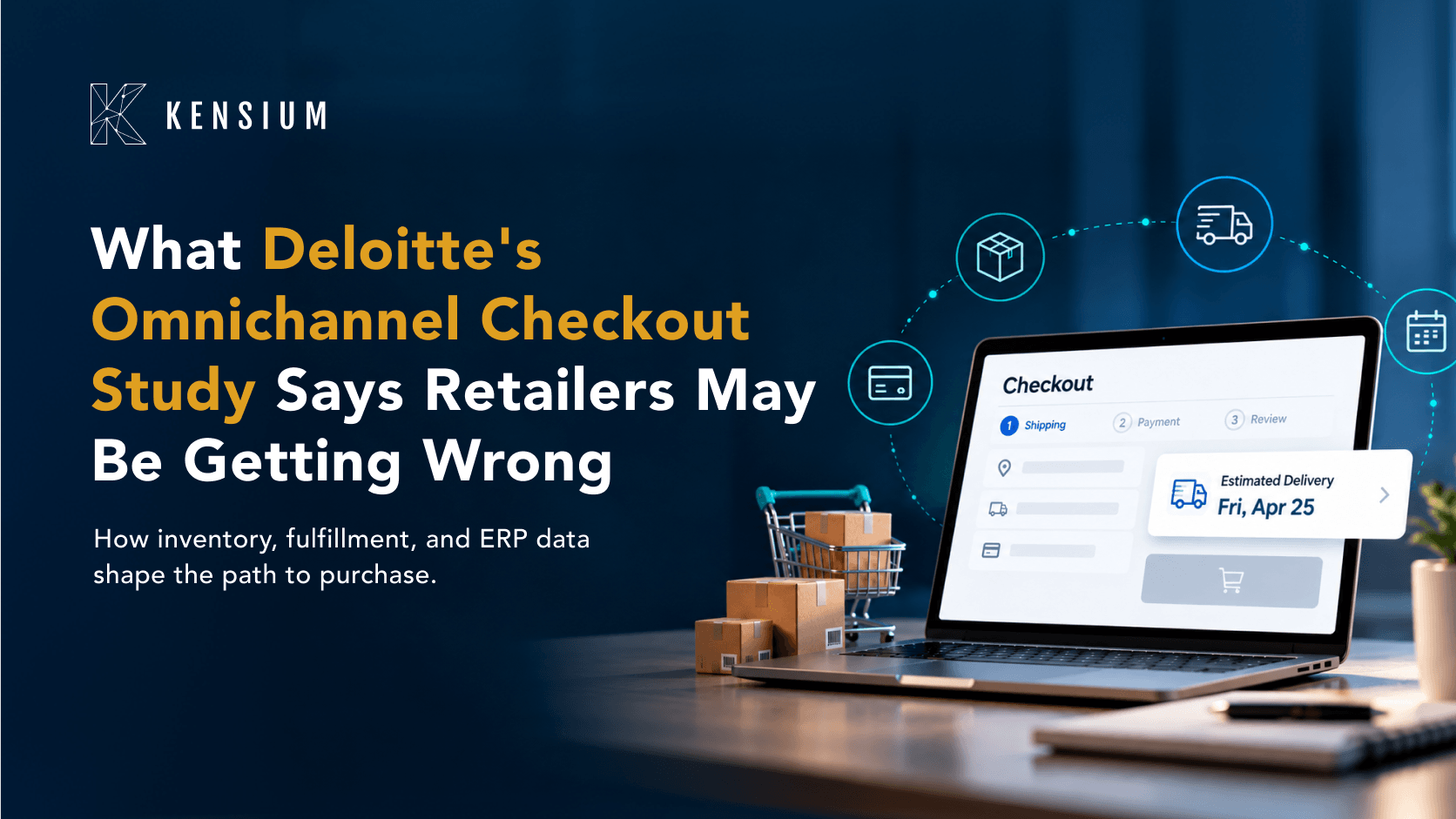
That is one of the points that stood out to me in Deloitte's report, Getting from browse to buy: Deloitte's omnichannel checkout study. Deloitte reviewed more than 300 companies and compared what retailers are doing at checkout with what consumers say matters to them, drawing on its 2026 Consumer Post-Purchase Surveys as well.
The report makes the case that checkout should not be viewed as simply the place where a retailer collects shipping information and payment. It is also the point where expectations about fulfillment, delivery and service begin to take shape. In that sense, checkout provides a pretty good window into how well the rest of the retailer's operation works.
What I found most interesting is that retailers and shoppers do not always seem to be focused on the same things. And having spent the last several years helping mid-market retailers connect their commerce platforms to the ERP systems that actually run the business, I think Deloitte's findings point to something the report itself only gestures at: most of what shoppers experience as a checkout problem is really a systems and data problem one layer down.
Key Takeaways
- Deloitte's 2026 omnichannel checkout study reviewed more than 300 retailers and found a persistent gap between what companies build at checkout and what shoppers say actually matters.
- Delivery timing, not payment variety, is the top checkout priority for shoppers. Fewer than half of the retailers Deloitte studied show a specific delivery date at checkout.
- Of consumers surveyed, 96 percent said their current payment options are already sufficient, which suggests that adding more payment methods delivers diminishing returns for most retailers.
- A believable delivery date is built from order and fulfillment data, not checkout copy. It depends on inventory location, processing time, carrier performance and historical accuracy. That information typically lives in the ERP and order management layer, not the storefront.
- Guest checkout, address-finding tools and social checkout all reduce friction at the moment retailers most risk losing a first-time buyer.
- Features with low adoption today, such as commercial and residential address flags, cross-brand checkout and digital cart sharing, show meaningfully higher consumer interest than merchant supply, suggesting the barrier is integration complexity rather than demand.
Customers Really Want to Know One Thing: When Will It Arrive?
Delivery is probably the clearest example.
Deloitte's consumer research found that arrival timing is the most important checkout issue for shoppers. Yet, according to the report, fewer than half of the companies it studied less than half of the companies it studied actually show customers a specific delivery date. Many still rely on shipping ranges, transit times or other estimates that require the shopper to figure out when the package is likely to arrive.
From the customer's perspective, that is not especially helpful.
Most shoppers are not trying to understand a retailer's shipping process. They simply want to know whether the order will be there by Friday.
Deloitte's own testing suggests that many retailers may be giving themselves more cushion than they need. In a test involving more than 1,000 online orders, the study found that over 30 percent reached the customer at least three days ahead of the delivery timeframe presented at checkout.
That may reduce the risk of missing a promise, but it can also hurt conversion. A retailer that says “Tuesday” may lose the order to a competitor that can confidently say “Friday,” even if both would actually deliver on Friday.
So how can retailers become more definitive?
The answer is not simply changing the wording on the checkout page. A meaningful delivery promise must be built from the information behind the order.
Retailers should be looking at factors such as where the inventory is being fulfilled, how long the order is expected to take to process, the destination, the carrier and service level, shipping cutoff times, weekends and holidays. The more accurately those pieces are connected, the easier it becomes to replace a generic shipping range with an arrival date that is specific to that order.
Actual performance should also be part of the equation. If orders moving from a particular fulfillment location to a particular region consistently arrive earlier or later than expected, retailers can use that history to improve future estimates.
The goal is not to show the fastest possible date. It is to show the most reliable date the retailer can stand behind.
And when the exact date cannot be known, a tight arrival window is still much more useful than a broad shipping estimate.
Deloitte suggests that some of the vagueness customers see at checkout may reflect retailers' lack of confidence in their fulfillment networks and carrier performance. That makes this much more than a website problem. Better promises may require better inventory visibility, more dependable processing data and tighter coordination among ecommerce, order management, fulfillment and delivery operations.
This is the part of the report I would push on a little further. Deloitte is right that the fix is not a checkout copy change, but the fix also is not usually a checkout platform change. In most mid-market retail environments I have worked in, the honest answer to “can you show a real delivery date” is no, not because the ecommerce platform cannot display one, but because inventory location, processing time and carrier performance live in three or four different systems that do not talk to each other in real time. The ERP knows what is in stock and where. The warehouse or 3PL system knows how long fulfillment actually takes. The carrier knows transit performance by lane. Unless those systems are integrated well enough to feed a single, current answer back to the storefront at the moment of checkout, the retailer is guessing, and a wide shipping range is what guessing looks like on the page.
More Ways to Pay May Not Be Where the Biggest Opportunity Is
The payment findings are also worth a closer look.
Retailers have continued to expand payment choice. Deloitte points to growth in buy now, pay later (BNPL), digital wallets such as Apple Pay and Google Pay, and peer-to-peer options including Venmo and Zelle.
That trend would seem to suggest that shoppers are demanding more payment alternatives.
But Deloitte's consumer survey paints a different picture. The overwhelming majority of respondents, 96 percent, indicated that the payment choices already available to them are sufficient for their online shopping needs. Credit cards also remained the preferred method across the age groups surveyed.
That does not mean retailers should stop supporting digital wallets or alternative payment methods. They can absolutely make checkout easier for certain customers.
But it does suggest that priorities matter.
If customers already have a payment method they are comfortable using but still cannot figure out when their order will arrive, adding another payment integration may not be the improvement that has the greatest impact.
More functionality does not automatically equal a better customer experience.
I would frame this as a broader lesson about where retail technology budgets tend to go. Payment integrations are visible, relatively contained projects with a clear vendor and a clear go-live date, which makes them easy to scope and easy to defend in a budget review. Fixing delivery date accuracy usually means untangling data flow between ecommerce, ERP, inventory and fulfillment systems, which is less visible and harder to schedule. Deloitte's data is a useful reminder that the projects that are easiest to greenlight are not always the ones customers are asking for.
Make the First Purchase Easy
Deloitte also highlights the importance of a straightforward guest checkout.
Retailers naturally want shoppers to create accounts. A registered customer can be easier to recognize and engage with on future visits. But Deloitte notes that many customers may not be ready to make that commitment before they have completed their first order. Making registration mandatory, or making guest checkout unnecessarily difficult, can create friction at exactly the wrong point in the buying process.
The better approach is pretty simple: make the first transaction easy.
Let the customer buy. Deliver the order as promised. Give them a good experience.
Then give them a reason to come back.
Deloitte also points to address-finding tools as a way to make checkout faster while reducing the possibility of incorrect shipping information. The report discusses social checkout as an emerging option that can use information from a customer's social profile to streamline parts of the checkout process.
Again, the important theme is less friction.
One nuance worth adding here: a well-run guest checkout still needs a customer record on the back end, even if the shopper never sees a login screen. Order history, returns, loyalty and future personalization all depend on the retailer being able to recognize that shopper the next time, whether or not they created a password. The best implementations I have seen quietly reconcile guest orders against the CRM or ERP customer record after the fact, so the business gets the long-term relationship data without asking the shopper to do any extra work up front.
Some of the More Interesting Ideas Are Still Rare
Deloitte also identified a few capabilities that are not common today but appear to have meaningful consumer interest.
Only 3 percent of the companies studied let shoppers specify whether a delivery address is commercial or residential, while 73 percent of surveyed consumers said they would use that option.
Cross-brand checkout, which allows purchases from multiple brand sites to be combined into one transaction, is also currently offered by only 3 percent of companies in the study. Deloitte found that 72 percent of consumers would use it.
Digital cart sharing is even less common, at 2 percent of companies studied, yet 41 percent of consumers expressed interest in using it.
Those features are interesting because they are not simply cosmetic enhancements. Deloitte points to potential benefits such as improved delivery accuracy, fewer delivery attempts, consolidated shipments and easier purchase approval or payment by someone other than the original shopper.
What stands out to me is how consistent the pattern is across all three features: consumer interest is meaningfully higher than merchant adoption in every case. That gap is rarely about retailers not seeing the value. Commercial versus residential address flags require carrier and shipping-rate logic that can act on that flag. Cross-brand checkout requires shared payment, tax, fraud and order management logic across what are often separate platforms or separate legal entities. Digital cart sharing requires an order object that can be handed off between accounts before it becomes a sale. Each of these is an integration and data architecture problem before it is a checkout feature, which is exactly why the adoption numbers are still so low even where the consumer demand is proven.
Checkout Is Really an Operations Issue
For me, this is the biggest takeaway from Deloitte's study.
Checkout may appear to be an ecommerce function, but the customer experience depends on a lot of other things working correctly behind it.
Can you accurately tell the shopper what is available? Can you provide a believable arrival date? Can the order move cleanly from the ecommerce platform into order management and fulfillment? Can the business actually deliver on the promise shown at checkout?
Deloitte's broader omnichannel research looks across checkout and payments, inventory, order management, fulfillment, delivery, returns and other parts of the post-purchase experience.
Customers do not see those as separate systems or departments. They just see the retailer.
That is why the best checkout experience may not be the one with the longest list of features. It may be the one that gives the customer the clearest answers and removes the most uncertainty.
Tell shoppers when the order is likely to arrive. Give them sensible ways to pay. Do not put unnecessary obstacles in front of a first-time buyer.
And above all, make sure the rest of the operation can keep the promises made at checkout.
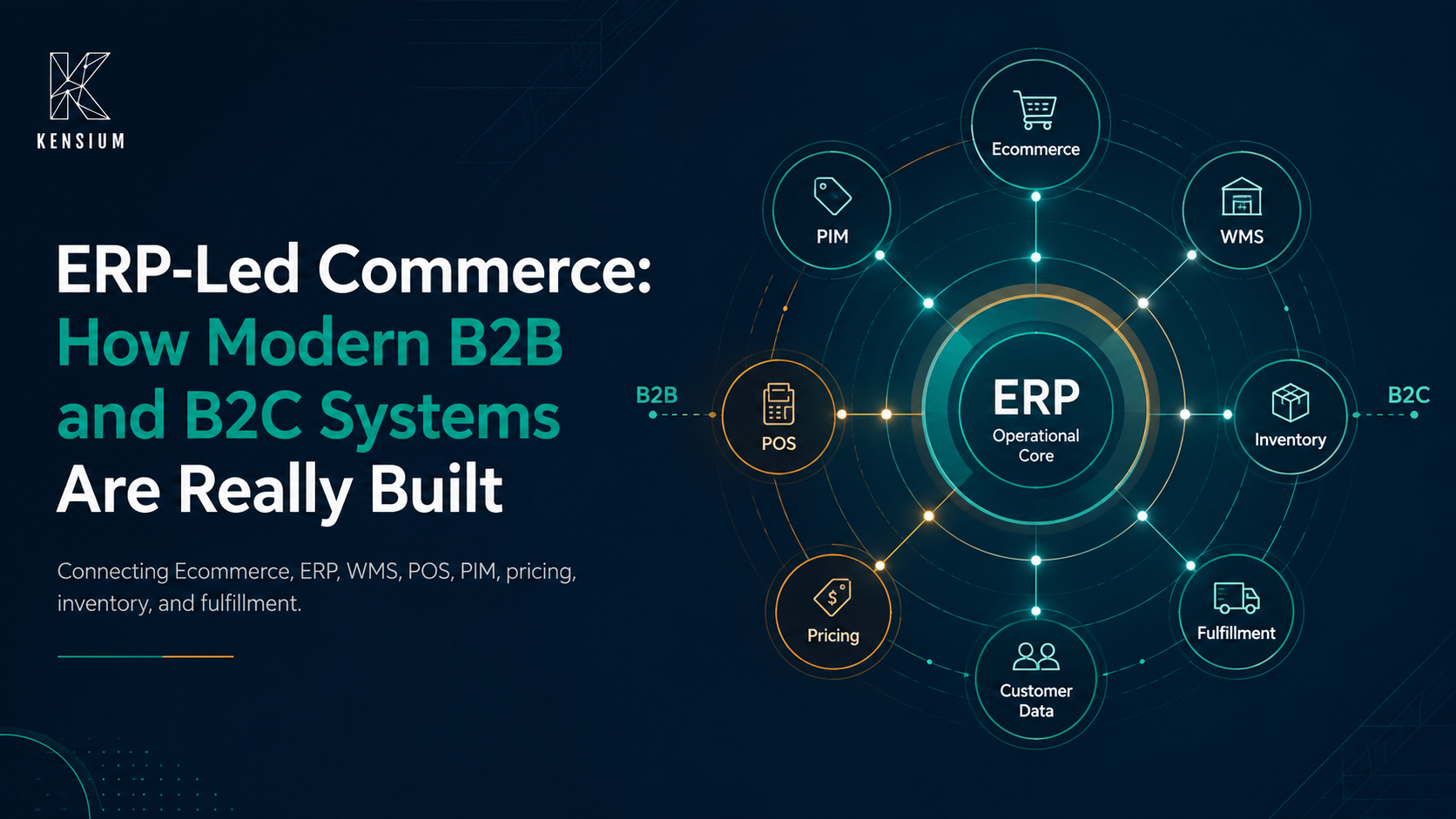
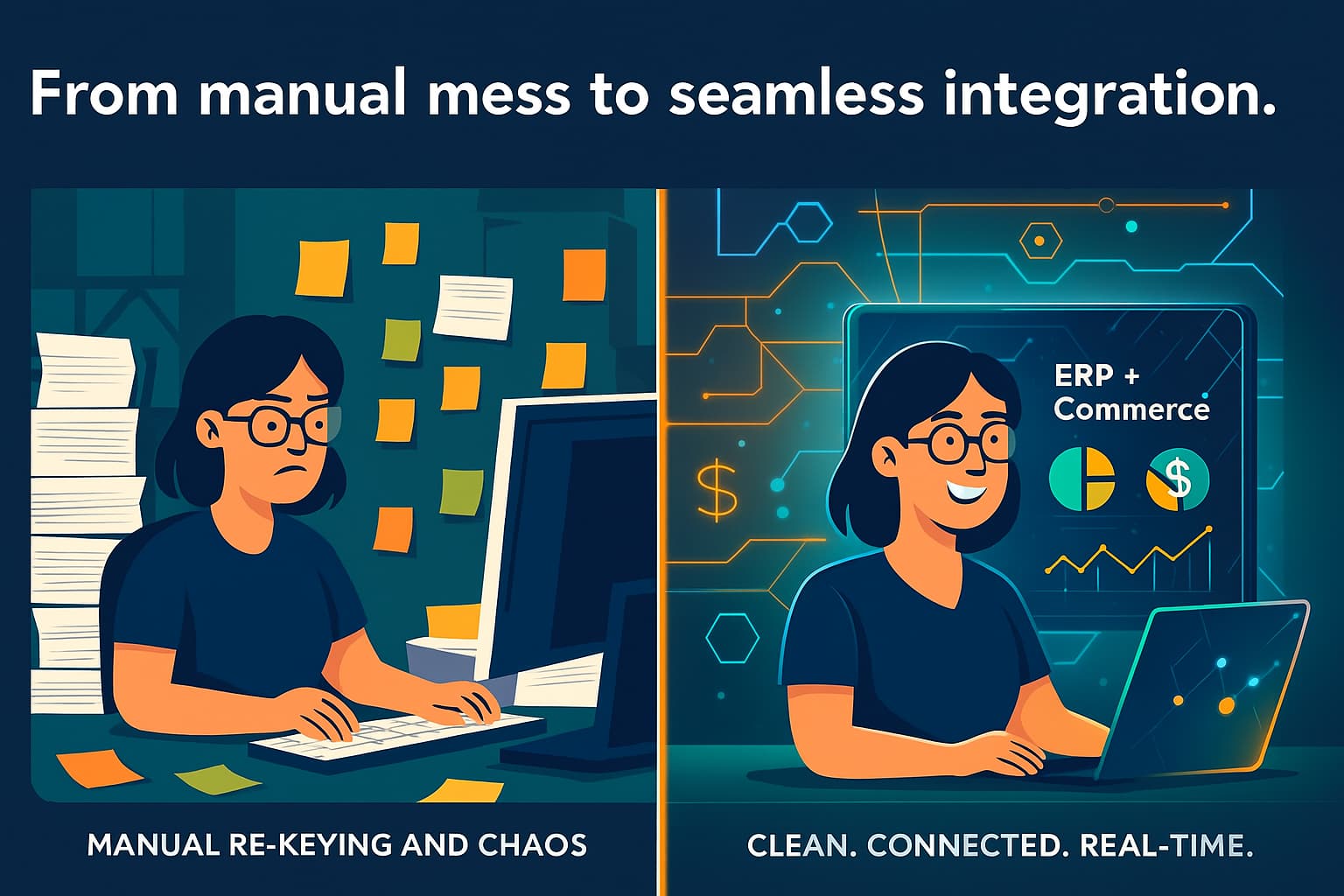
That last point is where an ERP-led view of commerce earns its keep. When the ERP is the system of record for inventory, orders, pricing and fulfillment, and the ecommerce platform is built to draw on that data directly rather than through periodic exports or manual reconciliation, the checkout page stops guessing and starts reporting. The delivery date it shows, the inventory it promises and the payment it processes are all downstream of decisions made well before the shopper ever reaches that page. Deloitte's study is a useful diagnostic for identifying where a retailer's checkout experience is falling short. Closing the gap is usually an integration project, not a checkout redesign.
Frequently Asked Questions
What is Deloitte's omnichannel checkout study?
It is Deloitte's 2026 report, Getting from browse to buy: Deloitte's omnichannel checkout study, based on a review of more than 300 companies' checkout experiences compared against Deloitte's 2026 Consumer Post-Purchase Surveys. It looks at delivery timing, payment options, guest checkout and emerging checkout features to identify where retailer priorities and shopper expectations diverge.
Why does delivery date accuracy matter more than payment options at checkout?
Deloitte's consumer research found that arrival timing is shoppers' top checkout priority, while 96 percent of consumers already consider their available payment options sufficient. Because most shoppers already have a payment method they trust, adding new ones tends to produce smaller experience gains than fixing unreliable or vague delivery estimates.
How can retailers show a more accurate delivery date at checkout?
An accurate delivery date depends on connecting several data points in real time: where the order will be fulfilled from, expected processing time, the destination, the carrier and service level, shipping cutoffs, and weekends or holidays. Retailers that also factor in actual historical delivery performance by fulfillment location and region can tighten their estimates further. This typically requires integration between the ecommerce platform, order management system and ERP rather than a checkout page redesign.
What does “ERP-led commerce” mean in this context?
ERP-led commerce means treating the ERP, not the ecommerce platform, as the single source of truth for inventory, pricing, orders and fulfillment data, and building the storefront and checkout experience to draw on that data directly. It is the architecture that makes reliable delivery dates, accurate inventory and consistent order status possible across every sales channel.
Should retailers prioritize guest checkout or account creation?
Deloitte's research suggests retailers should make guest checkout genuinely easy rather than pushing shoppers toward account creation before their first purchase. Mandatory registration adds friction at the point where a retailer is most likely to lose a new customer. Account-level benefits can still be captured on the back end by reconciling guest orders against the customer record after the sale.
Why are features like cross-brand checkout and digital cart sharing still rare?
Deloitte found meaningful consumer interest in features such as commercial and residential address flags, cross-brand checkout and digital cart sharing, yet very few retailers offer them. The gap is largely a systems integration challenge rather than a lack of demand. Each of these features requires shared logic across order management, payment, tax and fulfillment systems, which is harder to build than a front-end checkout enhancement.
Sources and References
This article is based on Deloitte's 2026 report, Getting from browse to buy: Deloitte's omnichannel checkout study, and Deloitte's 2026 Consumer Post-Purchase Surveys. The report is authored by Maura Leddy, Retail Specialist, Supply Chain & Network Operations, Deloitte Consulting LLP, with contributions from Vik Vashisht and Anderson Campana, both Managing Directors at Deloitte Consulting LLP.
Leddy, Maura, Vik Vashisht, and Anderson Campana. "Getting from browse to buy: Deloitte's omnichannel checkout study." Deloitte Consulting LLP, 2026. https://www.deloitte.com/us/en/Industries/consumer/articles/getting-from-browse-to-buy.html
.png)