Why Amazon Sellers’ Margins Are Getting Squeezed in 2025 — And What Smart Brands Are Doing About it in 2026
Talk to almost any US-based Amazon seller right now and you’ll hear the same thing:
“Sales haven’t dropped… but our margins have.”
This is a real trend happening across categories. Throughout late 2024 and early 2025, sellers have seen rising advertising costs, higher fulfilment fees, and an increase in competition — all of which have quietly eaten into profitability.
But the important part is this: Margins are not shrinking for everyone.
They’re shrinking for sellers who are still using “old Amazon tactics” in a new Amazon environment.
Here’s what’s really changed.
Advertising costs increased faster than conversion rates
More brands are using Amazon Sponsored Ads than ever.
More competition = higher CPC.
The issue is that many sellers are sending traffic to listings that don’t convert well. When conversion rate stays low:
- ACOS goes up
- Profit per sale goes down
- Sellers burn money faster than they grow
It’s not that Amazon Ads stopped working — it’s that the cost of inefficient ads has gone up.

Listing quality now directly affects ad efficiency
Amazon’s algorithm is rewarding listings with strong engagement:
- High conversion rates
- High-quality images
- Clean keyword optimization
- A+ content
- Consistent reviews
A poor listing is like a leaky bucket — no matter how much ad spend you pour into it, you lose money.
According to Jungle Scout's breakdown, listings with A+ Content can convert 10–20% higher, which directly lowers ad cost per sale: https://www.junglescout.com/resources/articles/amazon-a-plus-content/
This is why smart sellers optimize the listing first, and the ads second.
FBA, storage & operational fees have quietly increased
Marketplace Pulse has tracked fee changes that impacted almost every category — from inbound to storage to return handling: https://www.marketplacepulse.com/articles
None of these fee updates look huge individually, but together they squeeze margins, especially for:
- Bulky or heavy products
- Slower-moving inventory
- Oversized items
- Seasonal SKUs
Brands who don’t monitor operational costs lose profitability without realizing why.
Competition has changed — dramatically
Sellers are no longer competing only with small private-label brands.
They’re up against:
- Venture-backed DTC brands
- Aggregators with full Amazon teams
- Established retailers migrating online
- Brands investing heavily in paid search
Buyers now compare everything — from price and reviews to brand presence and packaging.
Winning requires more than “just listing” a product.
So how are profitable sellers still winning?
Here’s the good news: Many US sellers are still growing and maintaining strong margins.They just operate differently than those struggling.
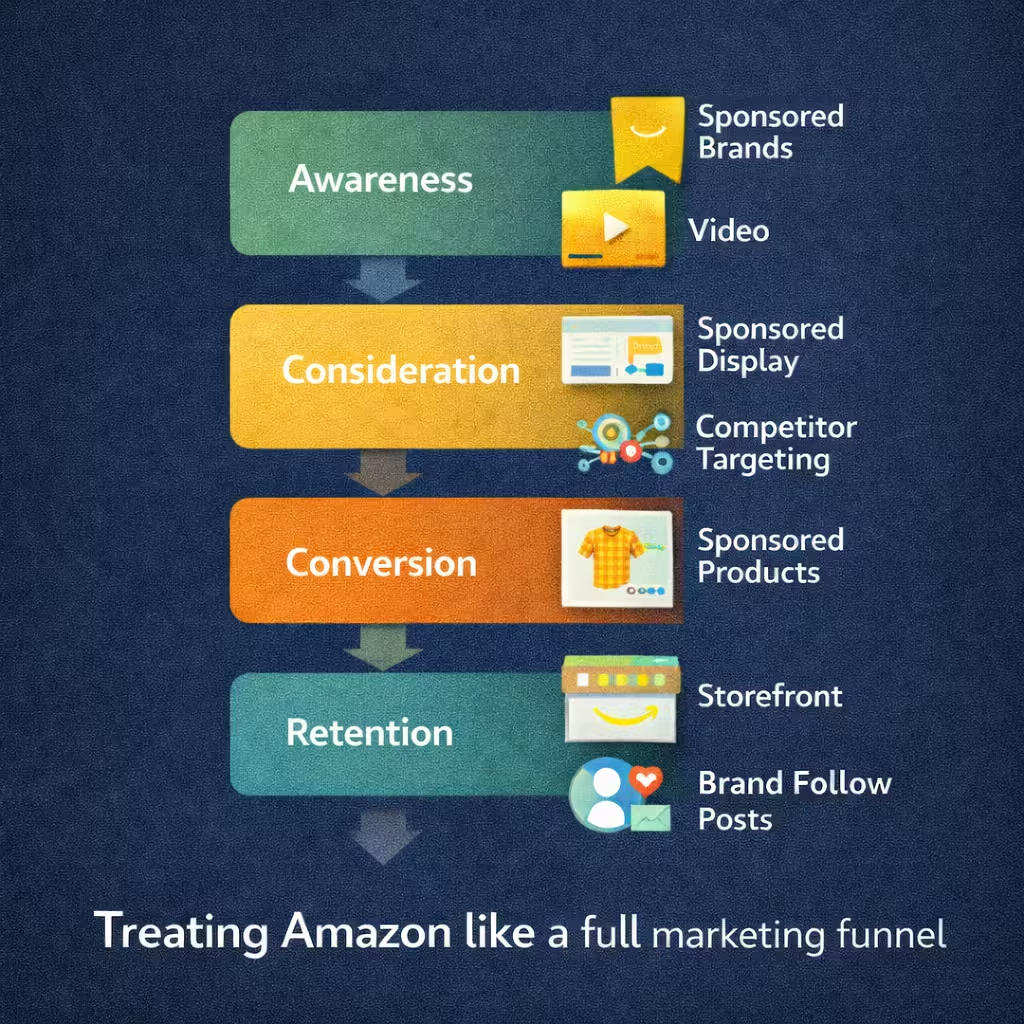
They treat Amazon like a full marketing funnel
Not “turn on ads and hope.”
Instead, they structure campaigns by intent:
- Brand Awareness → Sponsored Brands + Video
- Consideration → Sponsored Display + competitor targeting
- Conversion → Sponsored Products tied to optimized listings
- Retention → Storefront, Brand Follow, Posts
This reduces wasted clicks and increases repeat buyers.
They improve conversion before increasing ad spend
A highly converting listing can make the same ad budget produce more sales at lower ACOS.
They optimize:
- Titles and bullets for clarity
- Hero images + lifestyle imagery
- Infographics explaining product value
- A+ content
- Pricing and review strategy
When conversion improves → ads become cheaper.
They use data, not guessing
Sellers who know what’s happening outperform sellers who assume:
- Search term waste
- Negative keywords
- TACoS (not just ACOS)
- Contribution margin
- New-to-brand performance
- Weekly bid optimization
Even small data-driven decisions improve profitability quickly.
They don’t rely solely on ads
Profit also comes from:
- Organic keyword rank
- Repeat customers
- Brand follow + Storefront journeys
- Review velocity
- SEO-friendly content
When fundamentals are strong, ads amplify results instead of wasting budget.
The simple takeaway
Margins are not shrinking for everyone.
They’re shrinking for sellers operating reactively.
The sellers who are still profitable in 2025 are the ones who:
- Optimize conversion
- Structure ads by funnel stage
- Watch data weekly
- Control operational costs
- Think like a brand, not a product listing
Small improvements — even 1–2% conversion lift — can bring margins back fast.
Frequently Asked Questions (FAQ)
Are margins shrinking across every Amazon category?
No. Margins shrink primarily for sellers with inefficient ads, weak listings, or high operational costs.
Can improving conversion really reduce ACOS?
Yes. Higher conversion reduces the cost per sale, making ads more efficient.
What categories feel the most pressure in 2025?
Bulky, heavy, slow-moving, and seasonal products face the greatest fee impact.
Should sellers reduce ad spend to fix margins?
Not always. Most should improve conversion and intent segmentation before reducing budgets.
Is competition still increasing on Amazon?
Yes. DTC brands, retailers, and aggregators continue entering Amazon, raising the competitive standard.
.png)