


Connection is not enough
Shopify, ERP, inventory, and operations may be connected, but teams can still struggle with manual decisions, delayed reporting, and workarounds.


Commerce Conversations
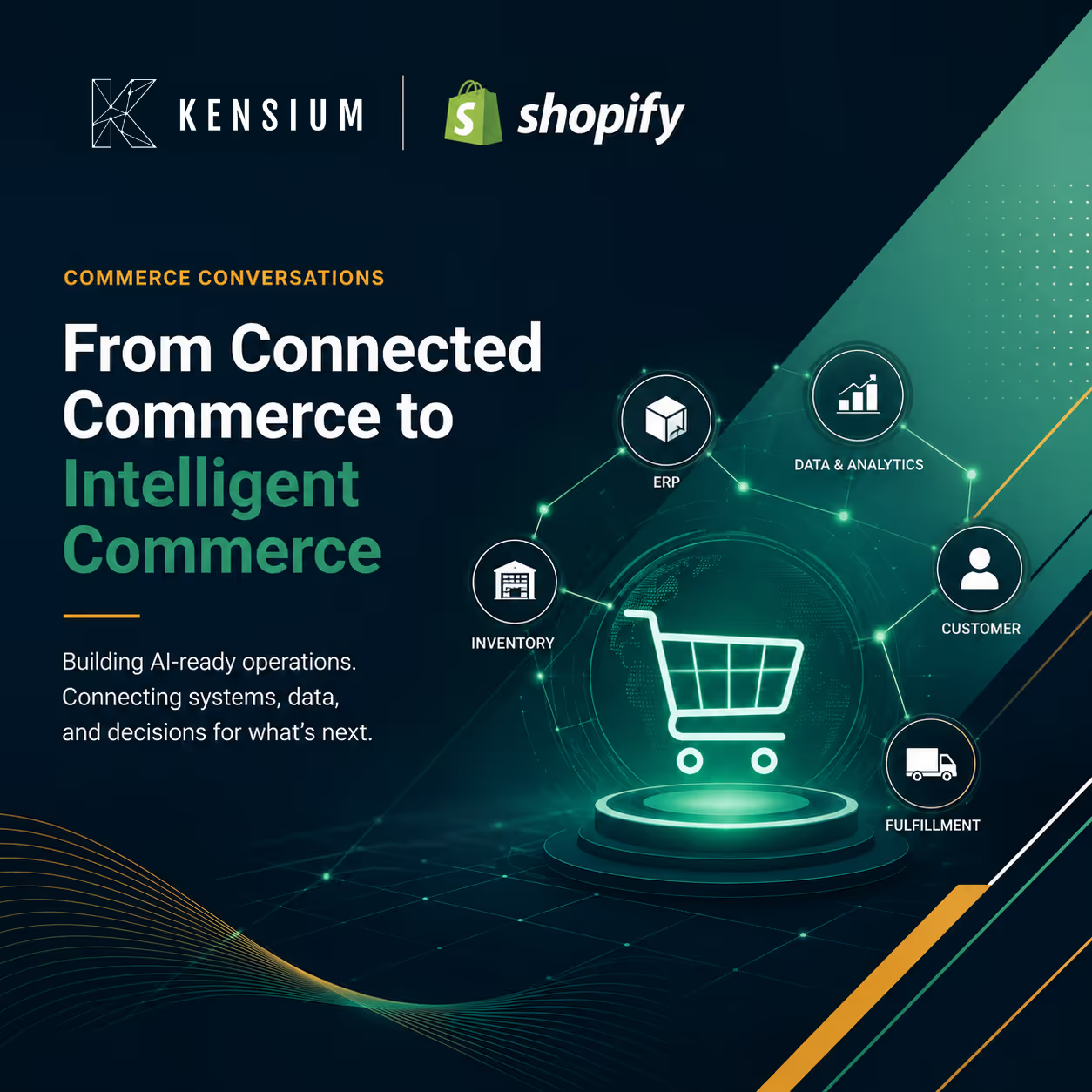
Watch the Shopify and Kensium replay on what comes after connected systems, why AI-ready operations need a stronger foundation, and how businesses can move from integration to intelligent execution.
Key Takeaways
The conversation focused on the operational reality behind AI in commerce. The message was clear: AI becomes useful when it is applied to clean data, coordinated workflows, governed business logic, and systems that can act from a reliable view of the business.
Shopify, ERP, inventory, and operations may be connected, but teams can still struggle with manual decisions, delayed reporting, and workarounds.
AI does not fix fragmented operations. If the underlying context is unreliable, AI can amplify the problem instead of solving it.
Automation follows predefined rules. Intelligent commerce helps teams see patterns, prioritize actions, and respond with better context.
Customer-specific pricing, approvals, credit limits, quoting, and inventory reservations create high-value opportunities for better decision support.
The best starting point is not an AI tool. It is identifying where better decisions, fewer exceptions, and cleaner processes can improve the business.
AI adoption works best when teams can validate recommendations, govern business logic, and gradually move from visibility to action.
The businesses that win next will not simply have more tools. They will have the strongest operational foundation.
Audience Q&A
The Q&A centered on scalability, practical AI value, non-technical leadership, and how flexible businesses can be when building operational AI around their own workflows.
A clear signal is when change becomes disproportionately expensive. If adding a new sales channel requires months of development across multiple systems, or testing a new pricing model requires manual changes in several places, the foundation is no longer acting like a platform for growth.
The same applies to smaller changes. If simple website content updates, operational reporting, or customer response workflows require too many teams, third parties, or development cycles, the business may be constrained by its architecture rather than supported by it.
The fastest value often appears in order exceptions, service context, and operational visibility. AI can help identify anomalies earlier, surface likely issues, recommend next steps, and give business leaders a clearer view of what is happening across the customer journey.
The goal at first is not always full autonomous action. The first practical step is better visibility: helping teams see issues earlier, understand them faster, and route decisions to the right people before problems become customer complaints.
Leaders do not need to start with technical tool choices. They should start by asking what the business needs to do differently: improve decision quality, respond faster, reduce operational cost, remove tribal knowledge, or make recurring pain points easier to manage.
The AI tool decision is not the strategy. The strategy is creating trustworthy systems, consistent data, visible workflows, governed logic, and empowered teams that can use intelligence to make better business decisions.
Businesses can build more tailored AI experiences around their own operational workflows, systems, and customer experiences when the platform and architecture support open integration. Shopify's APIs and emerging agentic commerce capabilities create room for merchants and partners to build around unique needs.
Examples discussed included AI-assisted configure, price, quote workflows, storefront interactions, draft order creation, and operational agents that use business-specific rules or IP. The key is making sure those agents are connected to reliable data and governed workflows.
Session Panel
The session brought together platform strategy, commerce architecture experience, and a moderated discussion focused on what AI readiness looks like in actual operations.

A seasoned technology leader with more than 20 years of experience in digital transformation, enterprise systems, and commerce innovation. Rahul works closely with businesses to build connected commerce foundations that scale across systems, teams, and channels.

A B2B Ecommerce strategist focused on helping manufacturers and distributors scale digital commerce through stronger operations, better architecture, and smarter platform decisions.

Ted Stenstrom leads Sales and Strategic Account Management at Kensium, bringing a people-first approach to customer relationships, strategic accounts, and commerce growth. His experience spans digital commerce, ERP-connected solutions, and go-to-market strategy.
Stay Connected
Sign up to get updates about upcoming commerce, ERP, operations, and AI-focused webinars from Kensium.
Fill out the form and we’ll keep you posted when new webinar opportunities are available.
Next Step
AI-ready commerce does not start with another tool. It starts with connected data, coordinated workflows, operational visibility, and business logic that can scale.
Watch the Replay311 S. Wacker Drive
Suite 2575
Chicago, IL 60606
4th Floor, Jyothi Pinnacle
Survey No 11, Kondapur Village
Hyderabad, Telangana 500081
12 Marsanne Place
Eschol Park
New South Wales 2558
Magnia Tower, Street 15 #503
Altabrisa
Mérida, Yucatan 97130