The B2B Buying Shift: What McKinsey Is Seeing Right Now
McKinsey & Co.'s latest B2B Pulse Survey highlights a fundamental shift in how B2B buyers research, evaluate, and purchase products and services. Buyers are no longer dependent on traditional, in-person sales models. Instead, they are increasingly comfortable completing high-value transactions through digital and remote channels.
This evolution in buyer behavior is why B2B omnichannel ecommerce, as outlined in the McKinsey B2B Pulse Survey, is no longer optional—it has become central to modern B2B sales strategy.
McKinsey’s research confirms a clear trend: Omnichannel ecommerce has overtaken in-person sales as the most effective revenue-generating channel for B2B organizations.
A Surge in High-Value Orders Through Digital Channels
One of the most striking insights from the McKinsey ecommerce report is how dramatically buyer confidence in digital purchasing has increased.
According to McKinsey’s B2B ecommerce findings:
- 39% of B2B buyers now spend over $500,000 per order through self-service ecommerce or remote interactions—up from 28% just two years ago
- 73% of buyers are comfortable spending $50,000+ in a single online transaction, compared to 59% in 2022
- 20% of buyers are willing to place orders exceeding $1 million digitally, signaling a major behavioral shift
These numbers underscore a key takeaway from e-commerce trends by McKinsey: High-value digital transactions are becoming normal, not exceptional.
Without a strong B2B ecommerce foundation, companies risk losing their highest-value buyers to more digitally mature competitors.
What Omnichannel Ecommerce Really Means for B2B Sales
When McKinsey talks about omnichannel B2B, they are not simply referring to “having multiple channels.” Instead, omnichannel ecommerce is about orchestrating a unified buying experience across:
- Self-service ecommerce platforms
- Remote sales interactions (video calls, virtual demos)
- Live chat and conversational commerce
- Mobile apps and buyer portals
- Traditional sales support where it adds value
In the context of B2B ecommerce strategy from McKinsey, success comes from enabling buyers to move fluidly between channels without friction, repetition, or data loss.
Ecommerce Is Now the Top Revenue Channel in B2B
One of the most important conclusions from the McKinsey B2B Pulse Survey is that ecommerce is no longer a “support channel.”

McKinsey reports that:
- 34% of total B2B sales revenue now comes from self-service ecommerce combined with remote online sales interactions
- Ecommerce has ranked as the most effective sales channel for four consecutive years
- Even traditionally offline industries—such as medical technology and industrial manufacturing—are rapidly adopting digital-first selling models
This validates what many organizations are already experiencing: B2B ecommerce is now the backbone of modern revenue generation.
The Decline of Traditional In-Person Sales
While digital channels rise, in-person sales continue to decline.
McKinsey’s B2B sales data shows:
- In-person sales now account for just 17% of B2B revenue, down from 22% two years ago
This does not mean sales teams are becoming irrelevant. Instead, their role is evolving—from transactional selling to advisory, value-driven engagement, supported by ecommerce infrastructure.
Fact: In-person sales are being dethroned not by technology alone, but by buyer preference for speed, convenience, and autonomy.
Why Seamless Omnichannel Experiences Matter More Than Ever
Today’s B2B buyers expect more than just purchasing options—they expect consistency, personalization, and continuity.
According to McKinsey omnichannel B2B research, buyers are more likely to:
- Return to vendors that provide a seamless experience across channels
- Increase order size when digital tools simplify reordering and account management
- Remain loyal to brands that integrate ecommerce with sales, service, and fulfillment
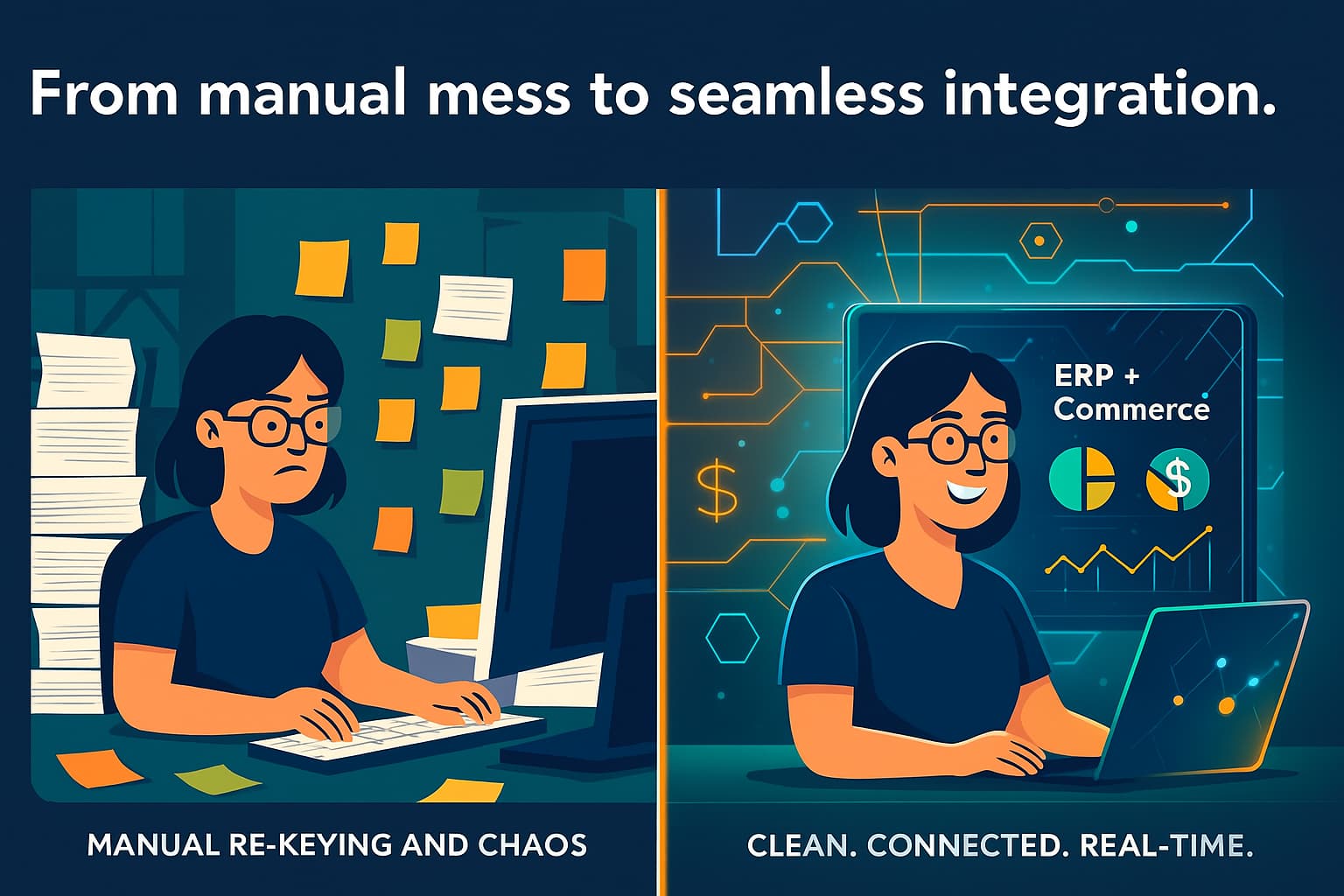
A fragmented experience—where ecommerce, ERP, CRM, and sales tools don’t align—creates friction that directly impacts revenue.
Ecommerce as the Cornerstone of B2B Sales Strategy in 2026 and Beyond
McKinsey’s message is unambiguous: Ecommerce is no longer a side initiative—it is the cornerstone of a winning B2B sales strategy.
As we move into 2026:
- Digital-first buyers will continue to dominate procurement decisions
- The gap between ecommerce leaders and laggards will widen
- Organizations without omnichannel capabilities will struggle to scale efficiently
Companies that fail to modernize their ecommerce and omnichannel strategy risk being left behind as buyer expectations continue to accelerate.
Key Takeaways from McKinsey’s B2B Ecommerce Research
- B2B buyers are increasingly comfortable with high-value digital purchases
- Omnichannel ecommerce has surpassed in-person sales as the top revenue driver
- Seamless, integrated omnichannel experiences are now mandatory—not optional
- Ecommerce is the foundation of modern B2B sales strategy
Frequently Asked Questions (FAQs)
Why is omnichannel ecommerce becoming more important for B2B businesses in 2026?
Omnichannel ecommerce is becoming more critical because B2B buyers now expect the same flexibility, speed, and convenience they experience in B2C. McKinsey’s B2B Pulse Survey shows buyers are increasingly comfortable completing high-value transactions digitally, making omnichannel capabilities essential for growth.
What exactly is omnichannel ecommerce in the context of B2B sales?
In B2B, omnichannel ecommerce refers to a unified buying experience across self-service ecommerce platforms, remote sales interactions, live chat, mobile tools, and traditional sales support—without friction or data silos between channels.
How does omnichannel ecommerce impact customer retention and loyalty?
A seamless omnichannel experience builds trust, reduces friction, and simplifies repeat purchasing. McKinsey’s B2B marketing insights show that buyers are more likely to stay loyal and increase spend when they can move effortlessly between channels.
How does AI improve omnichannel ecommerce for B2B sellers?
AI enhances omnichannel ecommerce by enabling personalized recommendations, predictive inventory insights, intelligent search, automated customer support, and smarter sales engagement—making digital channels more efficient and customer-centric.
Get Ahead with Kensium: Transform Your B2B Sales with Omnichannel Ecommerce
McKinsey’s findings make it clear: Digital-first B2B sales are here to stay. If you’re ready to lead in this evolving landscape, Kensium can help. With our expertise in omnichannel ecommerce, we empower B2B businesses to adapt, thrive, and drive revenue growth in a digital world.
🚀 Contact Kensium today to learn how our tailored B2B ecommerce solutions can position your business at the forefront of this transformation. Don’t just adapt—excel. Contact us now to start your journey.
.png)